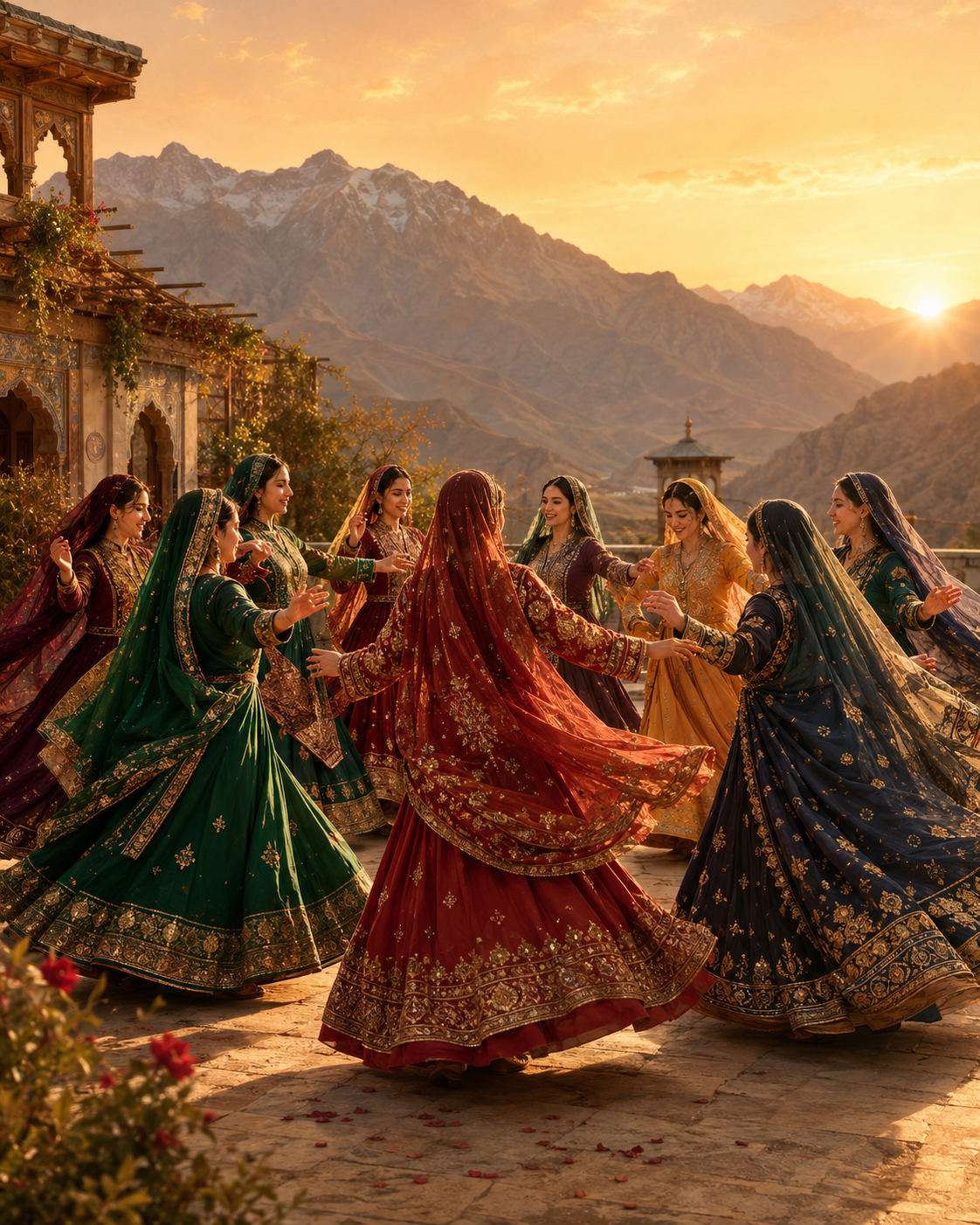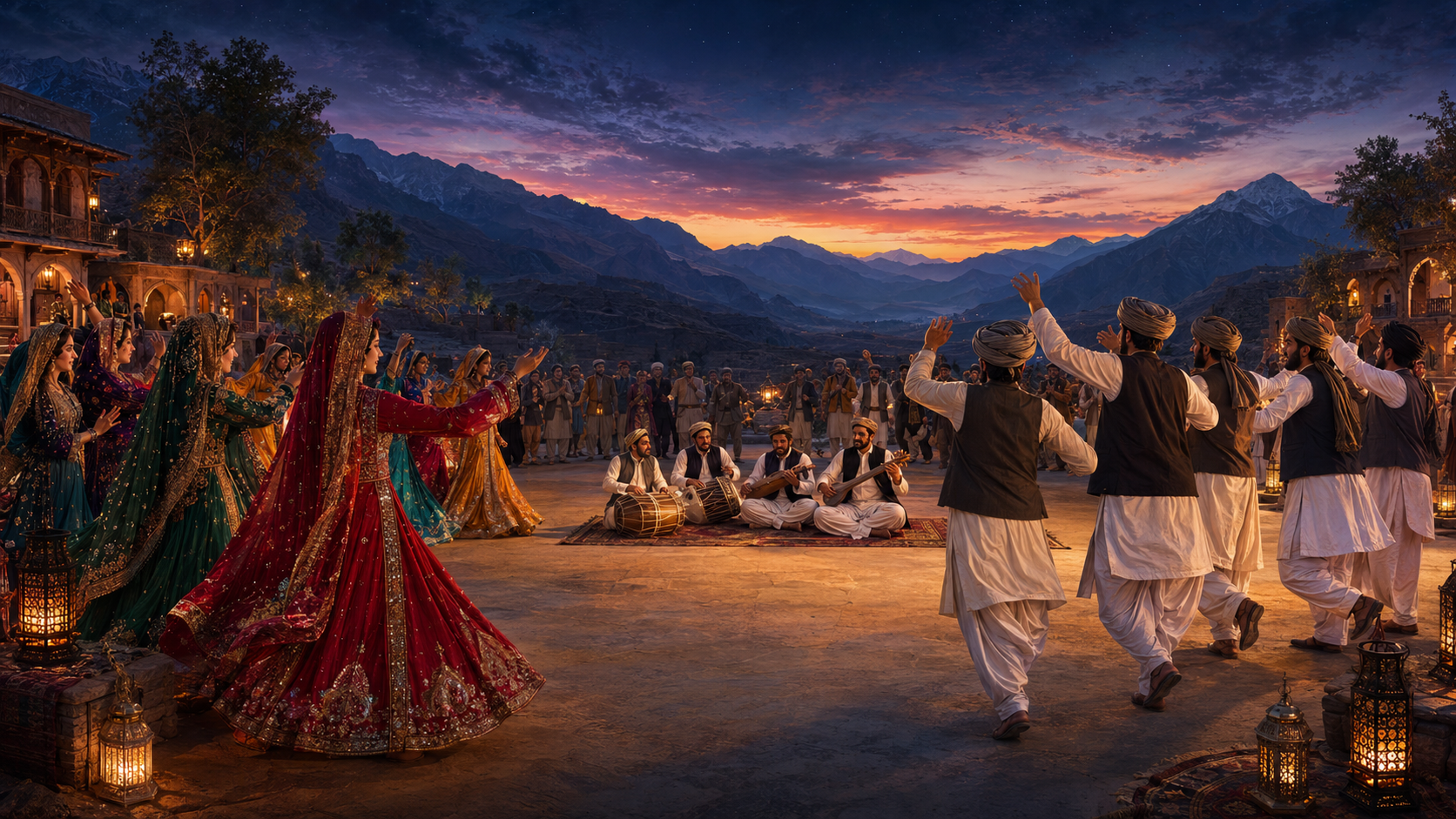
Artistic community scene of Pashtun women and men performing Attan

A living archive of a people

Discover

The Pashtuns

Everything about the Pashtuns, gathered into one evolving digital archive—from their origins, language and empires to culture, poetry, genetics, religious history, resistance, clothing, music and achievements.
Enter the archive

Chronicles of power

Kingdoms & Empires

Enter an evolving collection of dynasties, kingdoms, empires and modern states connected to the history of Afghanistan and the Pashtun world. Open any title to explore the posts gathered beneath it.
01

Parthian Empire

Archive chapter
Explore

This chapter is ready for its first article.

02

Kushan Empire

Archive chapter
Explore

This chapter is ready for its first article.

03

Hephthalite Empire

Archive chapter
Explore

This chapter is ready for its first article.

04

Zunbil Kingdom

Archive chapter
Explore

This chapter is ready for its first article.

05

Kabul Shahi Kingdom

Archive chapter
Explore

This chapter is ready for its first article.

06

Saffarid Dynasty

Archive chapter
Explore

This chapter is ready for its first article.

07

Tahirid Dynasty

Archive chapter
Explore

This chapter is ready for its first article.

08

Barmakids

Archive chapter
Explore

This chapter is ready for its first article.

09

Ghaznavids (Turco-Afghan)

Archive chapter
Explore

This chapter is ready for its first article.

10

Ghurid Empire

Archive chapter
Explore

This chapter is ready for its first article.

11

Khilji Empire

Archive chapter
Explore

This chapter is ready for its first article.

12

Bahmanid Dynasty

Archive chapter
Explore

This chapter is ready for its first article.

13

Sayyid Dynasty

Archive chapter
Explore

This chapter is ready for its first article.

14

Langah Dynasty

Archive chapter
Explore

This chapter is ready for its first article.

15

Lodhi Dynasty

Archive chapter
Explore

This chapter is ready for its first article.

16

Sur Empire

Archive chapter
Explore

This chapter is ready for its first article.

17

Karrani Dynasty

Archive chapter
Explore

This chapter is ready for its first article.

18

Rohillas in India

Archive chapter
Explore

This chapter is ready for its first article.

19

Hotaki Empire

Archive chapter
Explore

This chapter is ready for its first article.

20

Durrani Empire

Archive chapter
Explore

This chapter is ready for its first article.

21

Barakzai Dynasty

Archive chapter
Explore

This chapter is ready for its first article.

22

Communist Republic of Afghanistan

Archive chapter
Explore

This chapter is ready for its first article.

23

Islamic Republic of Afghanistan

Archive chapter
Explore

This chapter is ready for its first article.

24

Islamic Emirate of Afghanistan

Archive chapter
Explore

This chapter is ready for its first article.

Identity • Geography • People

Who Are the Pashtuns?

Pashtuns are an Eastern Iranian people whose traditional homeland stretches across southern and eastern Afghanistan and northwestern Pakistan. Their native language is Pashto, which belongs to the Eastern Iranian branch of the Iranian language family.
1
Today, Pashtuns live throughout Afghanistan and Pakistan, with major communities in Kandahar, Jalalabad, Kabul, Peshawar, Quetta and Karachi. Pashtun communities are also found in Iran, India, the Gulf states, Europe, North America and Australia. The worldwide population is commonly estimated at approximately 60–70 million; exact figures remain estimates because Afghanistan has not conducted a recent comprehensive ethnic census.
1
Read the references ↓
Map showing the main Pashto-speaking areas of Afghanistan and PakistanTraditional homeland
60–70 million
Estimated worldwide Pashtun population

Living heritage

Culture, Music & Social Life

Pashtun culture is shaped by the Pashto language, Islam, Pashtunwali, poetry, music, traditional clothing and a powerful tradition of hospitality. Pashtunwali is the traditional social code of Pashtun society, emphasizing honour, courage, self-respect, independence, justice and hospitality.
2
Artistic scene of Pashtun women performing AttanWomen of Attan
I

Tribes, Jirga & Hujra

Traditionally, Pashtun society has been organized through tribes, subtribes, clans and extended families. Important community matters have often been discussed through a jirga—a council of respected elders that makes decisions and helps resolve disputes. The hujra, a traditional community guesthouse, has also served as a place where guests are welcomed and community members gather.
2
Artistic scene of Pashtun men performing AttanMen of Attan
II

Music & Attan

Music and poetry hold an important place in Pashtun cultural life. Traditional performances use instruments such as the rubab, dhol, tabla and toola. Attan is the most famous Pashtun dance: dancers form a circle while the drumbeat begins slowly and gradually becomes faster and more energetic. Different tribes and regions preserve their own forms, including Khattak, Wazir, Mehsud, Kochi, Zadran, Zazai, Wardaki and Mangal styles.
3

Sources & image credit

References

Sources used for the introductory sections of this living archive.
  1. 01
    Pashtuns
    Introduction, geographic distribution, population and general culture.
  2. 02
    Pashtun culture
    Pashtunwali, tribal society, jirga, hujra and Attan.
  3. 03
    Attan
    Dance, music, performance and regional styles.
  4. 04
    Map of Pashto-speaking areas
    Map by Uanfala, licensed CC BY-SA 4.0.